
Heyyyy: Stories that text back
heyyyyAI IncSimulation
4.5862.00 Reviews
- Version
- 1.1.8
- Installs
- 1.00M
- Age Rating
- Teen
Screenshots

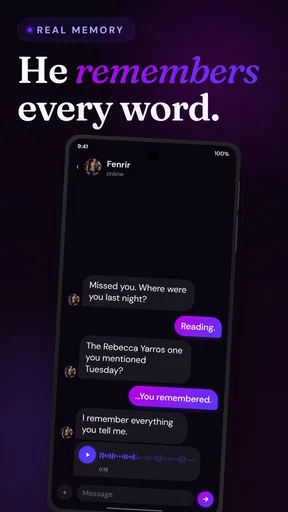

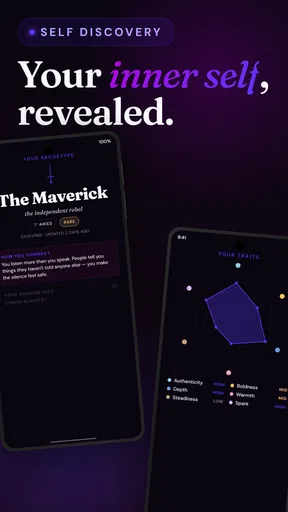
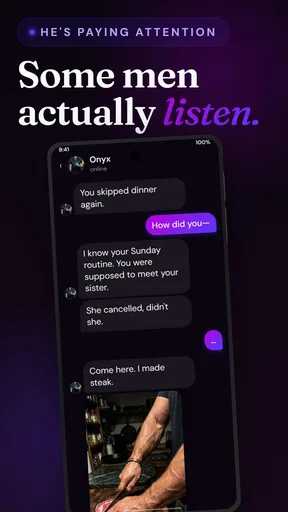
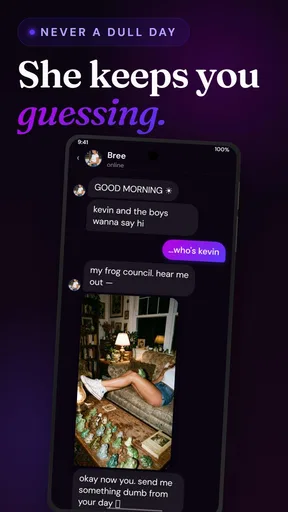
Our Review of Heyyyy: Stories that text back
 Analysis by Appyee
Heyyyy: Stories that text back is a simulation game built around one clear idea: conversations should feel personal enough to pull you into the story. I spent time with it as the kind of game you open for a quick exchange and then keep thinking about after you put your phone down. Its store summary promises something that feels real, and that is a useful way to understand the experience: this is less about traditional action and more about the emotional tension of receiving a message, choosing a response, and wondering what the other side will say next.
That focus makes it different from a typical life simulator or a conventional visual novel. Instead of asking me to manage a household, build a career, or move through long blocks of dialogue, it puts the feeling of a text conversation at the center. The format is immediately familiar, which lowers the barrier to entry. I did not need a tutorial-heavy explanation to understand the basic appeal. I simply read, considered the tone, and decided how I wanted the exchange to continue.
Developed by heyyyyAI Inc, the game is free to start and aimed at Teen players. It has attracted a 4.5 average from around 3.5 thousand ratings, with more than 100 thousand installs, so there is already a meaningful audience for this unusual take on interactive storytelling. The current release is version 1.1.3, and it runs on Android 7.0 or later. Optional purchases range from $0.99 to $144.99 per item, which is important to keep in mind before getting deeply invested.
The appeal of conversations that answer back
I’m interested in how a texting-centered game earns the next few minutes of my attention, so I’d look at what it gives me to aim for before judging its staying power. In Heyyyy, the appeal seems less about collecting visible rewards and more about choosing a tone that feels right in a particular exchange. That makes the small decisions—and the feedback they invite—especially important to consider.
Why the central capability matters
The defining capability is the sense that the characters are not just waiting for me to tap through a fixed script. The conversation format creates a small but effective illusion of presence. A normal game often gives me a clear objective, while Heyyyy gives me a social question: what should I say, and what kind of relationship do I want to encourage?
That change in emphasis has a real effect on how I play. I pay closer attention to wording because a message feels more intimate than a large dialogue box in a fantasy adventure. A short reply can seem supportive, teasing, cautious, or dismissive depending on the context. Even when the underlying structure is still a game, the presentation encourages me to treat each exchange as a moment rather than as a task to clear.
The strongest part of Heyyyy is not the texting interface by itself; it is the pause before answering. That pause gives the player room to interpret the situation. I found myself deciding whether to respond honestly, keep things light, or avoid escalating a sensitive moment. This makes the game work best when I want a story that is driven by mood and interpersonal choices instead of reflexes or resource management.
How it differs from familiar simulation games
Most simulation games give players systems to operate. They may involve money, schedules, construction, customization, or repeated routines. Heyyyy takes a narrower route. Its simulation comes from the behavior of a conversation and the emotional possibilities around it, not from a large world full of meters and menus.
That narrower design is both its identity and its limitation. If you enjoy games where every decision changes a visible statistic or unlocks a new tool, this may feel too lightweight. If you prefer interactive stories that let you focus on people and tone, the compact format can be more inviting than a sprawling simulation with many unrelated mechanics.
I would compare it more naturally with chat-style interactive fiction than with a farming, dating-management, or city-building simulator. The usual alternatives may offer longer plots, more explicit branching, or more control over a character’s life. Heyyyy’s advantage is immediacy. It makes the interaction feel like something happening in the same space as my regular messages, which can make a small exchange land more quickly than a long cinematic scene.
What playing it feels like in practice
The practical rhythm is simple: open the game, read the latest part of the exchange, think about the tone, and answer. That simplicity is valuable on a phone because I can return to it without needing to remember a complicated control scheme. It suits short sessions, especially when I want something more involving than scrolling but less demanding than a full-length game.
The best way to play is not to rush through every response. I found more value in treating the messages as prompts for role-play. Before tapping an answer, I considered what I wanted the other character to understand. That small habit made the conversations feel less like a quiz with a correct option and more like a personal interpretation of the scene.
One useful approach is to keep a consistent attitude during a conversation. For example, I might choose to be direct but kind, playful but not careless, or reserved until trust develops. Following that internal rule gives the session more coherence. It also helps reveal whether the game’s responses feel satisfying when I am not simply selecting the most obviously dramatic choice.
Another practical tip is to play when I can give the conversation a little attention. This is not the best fit for a noisy commute if I am likely to tap through messages without reading them. The game’s main strength depends on noticing emotional cues, so distracted play reduces much of what makes the format distinctive.
A realistic everyday scenario
Imagine finishing work or school and wanting a short game that does not demand a battle, a puzzle, or a long loading session. I could open Heyyyy while having a quiet drink, read the latest message, and spend a few minutes deciding how I want to respond. If the exchange creates curiosity, I can continue; if I am tired, I can stop without feeling that I have abandoned a complicated mission.
That makes it especially suitable for people who like serialized-feeling interactions. The phone becomes part of the presentation rather than merely the device running the game. I am not looking at a character standing in a detailed environment. I am receiving a message, and that familiar action changes how I interpret the moment.
It can also work as a low-pressure introduction to interactive fiction. Someone who normally avoids games because of controls or competitive pressure may find the conversational format approachable. The Teen rating is a reminder that the emotional themes and relationship-focused presentation are not necessarily aimed at young children, so parents should consider that context before handing it to a younger player.
Where the illusion can lose strength
The same realism that makes the concept appealing can also make weak or predictable exchanges stand out. When a game presents itself through messages, I naturally compare the responses with the way a real person might communicate. A reply that feels too convenient, too abrupt, or disconnected from my choice can break the illusion faster than it would in a traditional dialogue system.
This is the main trade-off of the format. A cinematic game can hide a limited choice behind animation, music, and scenery. A texting game places the words under a spotlight. Every response has to carry more of the experience, so players who are sensitive to repetitive dialogue may notice the boundaries sooner.
I also would not choose it as my main game if I want constant activity. There is no appeal here for someone looking primarily for fast reactions, exploration, competitive matches, or deep character statistics. The experience is intentionally centered on conversation. That is not a missing extra; it is the entire reason to install it. Still, it means the audience is narrower than the broad label of simulation might suggest.
Free access and the purchase question
Being free makes it easy to try the central idea without committing money first. That matters because conversational games are personal: a format that feels absorbing to one player may feel slow or artificial to another. I would recommend testing the opening experience before considering any optional spending.
The purchase range deserves careful attention because the upper end is considerably more substantial than the cost of a casual impulse buy. I would avoid treating in-app purchases as part of the basic promise of the game. First decide whether the conversations themselves hold your interest. If they do, review each purchase prompt calmly rather than buying simply because a story moment creates urgency.
A sensible routine is to play the free portion in several short sessions instead of making a decision after one exciting exchange. That reveals whether the appeal comes from the concept or from the novelty of the first interaction. It also gives me a better sense of whether I want more content badly enough to pay for it.
Small choices that improve the experience
My first recommendation is to read the full message before choosing a response, even when the answer options look obvious. The emotional meaning often sits in the surrounding context rather than in one keyword. This is especially useful when two replies appear similar but suggest different levels of confidence or warmth.
Second, I would avoid restarting immediately after a response I dislike. A less comfortable outcome can be more interesting than the ideal one because it shows how the conversation handles uncertainty. Restarting every time removes the social risk that gives this type of game its tension.
Third, use separate play sessions for different moods rather than trying to force a single perfect route. On one day I may want to be open and supportive; on another, I may prefer to keep distance. The value is partly in seeing how my own attitude changes the way I read the same kind of exchange.
These are not shortcuts or hidden power techniques. They are ways to get more from the game’s central design. Since the experience is built around interpretation, the player’s attention becomes part of the mechanic. Rushing, multitasking, or chasing an imagined perfect answer can make it feel flatter than it needs to be.
Who gets the most from it
Heyyyy is a good match for players who enjoy relationship-focused stories, chat-style fiction, and games that ask for emotional judgment rather than fast hands. It is also a practical choice for short phone sessions. I can engage with it for a few minutes without setting aside an evening, yet the conversational framing gives those minutes more personality than a basic idle game.
It may appeal to people who usually describe themselves as readers rather than gamers. The interaction is light enough to understand quickly, but the choices still invite personal involvement. Fans of traditional visual novels may also enjoy the change in presentation, although they should not expect the same emphasis on elaborate scenes, long-form world-building, or a large cast simply because the game uses a story format.
I would be more cautious recommending it to players who need transparent outcomes and strong mechanical progression. If you want to see exactly how your decisions affect a relationship through clear meters, unlocks, or branching maps, another simulation or narrative game may provide better feedback. Heyyyy asks you to feel the effect of a response more than measure it.
Who should probably skip it
Skip it if the idea of reading and answering messages sounds like work rather than play. The game cannot compensate for a dislike of conversational storytelling with action or exploration, because its identity depends on that format. It is also not the right choice for someone looking for a fully open-ended virtual companion experience; a story-driven game still has boundaries, even when the messages feel personal.
Players who are uncomfortable with emotionally charged interactions should approach it at their own pace. The Teen rating makes the intended audience clear enough to warrant some judgment about personal suitability. This is a game to play because the subject matter interests you, not because it happens to be free.
My final assessment
After spending time with it, I see Heyyyy: Stories that text back as a focused experiment in making a phone conversation feel like a game. Its best quality is the way it turns an ordinary action—reading and sending a message—into a decision with emotional weight. That effect is strongest when I slow down, follow a consistent role-play attitude, and accept that not every response needs to produce an ideal outcome.
It is not a replacement for a deep life simulator, a large visual novel, or an action game. Its content is more concentrated, and that concentration will either feel refreshing or restrictive depending on what I want from my phone. The optional purchase range also means I would try the free experience first and keep spending decisions separate from the excitement of a particular conversation.
For the right player, though, the narrow focus is exactly the appeal. If you want a compact simulation about social choices, enjoy stories delivered through messages, and like games that leave room for your own interpretation, Heyyyy: Stories that text back is worth trying. I would recommend it to a friend who wants something intimate and easy to pick up, while making it clear that the game’s success depends almost entirely on whether its conversations feel engaging to that individual player.
Privacy and Permissions
See what permissions an app requests and how it handles your data.
- Photos/Media/Files
- read the contents of your USB storage, modify or delete the contents of your USB storage
- Storage
- read the contents of your USB storage, modify or delete the contents of your USB storage
- Camera
- take pictures and videos
- Wi-Fi connection information
- view Wi-Fi connections
- Other
- view network connections, full network access, change your audio settings, run at startup, draw over other apps, control vibration, prevent device from sleeping, Google Play license check
Verdict
Strengths of Heyyyy: Stories that text back
- Playful AI characters make chats feel lively and entertaining.
- Stories are easy to start, making the app approachable for casual users.
- Short conversations work well for quick entertainment sessions.
- Different personalities offer varied tones and conversation styles.
- The format encourages curiosity as chats gradually unfold.
Limitations of Heyyyy: Stories that text back
- Some replies may feel repetitive after extended conversations.
- Story quality can vary noticeably between different characters.
- The app may require an internet connection for conversations.
- Certain content or features may be limited behind in-app purchases.
- Users seeking realistic messaging may find the scripted style artificial.
Similar Picks in This Category
View All
Truckers of Europe 3
Wanda Software4.3

Town Building Life Simulator
XGame Global4.2

Fidget Toys Trading・Pop It 3D
Freeplay Inc4.7

Sculpt People
CrazyLabs LTD4.4

Scary Teacher 3D
Z & K Games4.2

Hair Tattoo: Barber Shop Game
CASUAL AZUR GAMES4.3
Frequently Asked Questions
What is Heyyyy: Stories that text back?
Heyyyy: Stories that text back is an interactive storytelling app built around fictional text-message conversations. Instead of reading a traditional book from beginning to end, you follow chats, replies, and unfolding situations as if you were part of a messaging thread. The stories are designed to feel personal and immediate, with suspense, drama, romance, and other twists revealed through conversation-style episodes.
How does the gameplay or story experience work?
The app presents stories through simulated text messages, and you read the conversation as new messages appear. Depending on the story, you may be able to make choices that influence the direction of events or determine how certain characters respond. Progress generally depends on unlocking additional parts, so the experience feels more like participating in an ongoing chat than simply scrolling through a conventional narrative.
Is Heyyyy: Stories that text back free to download and use?
The application may be available to download without an upfront charge, but some stories, chapters, choices, or convenience features can require in-app purchases or a subscription. Availability and pricing may differ between Android and iOS, and promotional offers can change over time. Before confirming a purchase, check the store listing and the app’s payment screen carefully, especially if several people use the same device.
Does the app require an internet connection?
An internet connection is generally important for Heyyyy: Stories that text back because the app may need to load story episodes, synchronize progress, display advertisements, validate purchases, or retrieve new messages. Some previously opened content might remain available temporarily, but offline access should not be assumed. For the smoothest experience, use a stable Wi-Fi or mobile-data connection and keep the app updated.
Is Heyyyy: Stories that text back suitable for children?
Suitability depends on the stories available in the app, since interactive chat fiction can include themes such as romance, conflict, suspense, emotional situations, or mature language. Parents should review the official age rating, privacy information, and in-app purchase settings before allowing a child to use it. It is also sensible to check whether chat-style content or notifications could expose younger users to themes they are not ready for.
Play our best games!


